
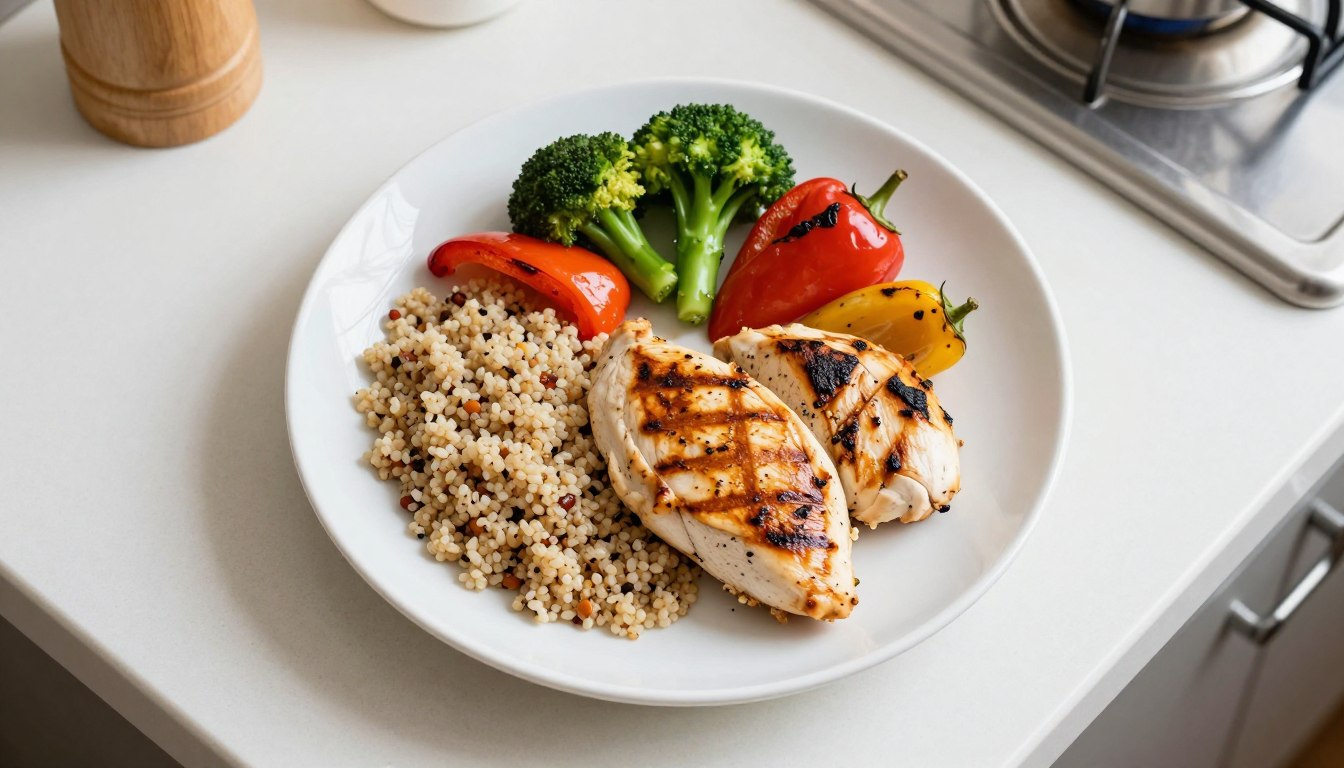
You want to eat better and feel more energized. You know protein matters. But between work, family, and everything else, the idea of tracking macros or cooking elaborate meals feels overwhelming.
Here’s the truth: high-protein eating doesn’t have to be complicated.
You don’t need fancy ingredients, meal prep containers stacked to the ceiling, or hours in the kitchen. Simple meals with good protein sources can support your energy, help you feel full longer, and fit into your actual life.
This isn’t about perfection. It’s about progress. And it starts with meals that work for you, not against you.
Disclosure: This post may contain affiliate links, including Amazon links. As an Amazon Associate, I earn a small commission from qualifying purchases at no additional cost to you.
Why Protein Matters (Without the Science Lecture)

Protein is more than just a nutrition buzzword. It plays a real role in how you feel throughout the day.
When you eat enough protein, your body uses it to build and repair muscle. That matters whether you’re working out or just trying to keep up with daily life.
Protein also helps you feel satisfied after meals. Unlike foods that leave you hungry an hour later, protein keeps you full longer. That means fewer trips to the snack drawer.
What Protein Actually Does
- Supports steady energy levels instead of the afternoon crash
- Helps stabilize blood sugar so you avoid those hangry moments
- Keeps you satisfied between meals, reducing mindless snacking
- Supports muscle maintenance, especially important as we age
- Assists with recovery if you’re active or exercising
You don’t need to obsess over grams or numbers. Just include a good protein source with most meals. That simple shift can make a noticeable difference in how you feel.

What Makes a Meal “High-Protein” (Without Overthinking It)
A high-protein meal typically contains at least 20 to 30 grams of protein per serving. But you don’t need to pull out a calculator at every meal.
Instead, think about building your plate around a solid protein source. Then add veggies, a smaller portion of carbs, and some healthy fat. That’s it.
Easy Protein Sources You Already Know
Animal Proteins
These are the most concentrated sources of protein and contain all essential amino acids your body needs.
- Chicken breast or thighs
- Ground beef or turkey
- Salmon, tuna, or white fish
- Eggs (the whole egg, not just whites)
Dairy Options
Dairy products pack protein along with calcium and other nutrients that support bone health.
- Greek yogurt (plain is best)
- Cottage cheese
- Regular cheese in moderation
- Milk or kefir
Plant Proteins
These provide fiber along with protein, making them filling and supportive of digestive health.
- Black beans or chickpeas
- Lentils (red, green, or brown)
- Tofu or tempeh
- Quinoa and edamame
Quick Additions
These ingredients boost protein content without requiring extra cooking time or complicated preparation.
- Protein powder in smoothies
- Nuts and nut butters
- Seeds like hemp or chia
- Protein-enriched pasta

Building Your Plate (The Simple Version)
Start with your protein source as the foundation. A portion about the size of your palm usually delivers around 25 to 30 grams of protein.
Fill half your plate with vegetables or salad. This adds fiber, vitamins, and volume without many calories. It makes your meal more satisfying.
Add a smaller portion of carbs. Think rice, potatoes, pasta, or bread. You don’t need to avoid carbs entirely. Just keep the portion reasonable.
Include a small amount of healthy fat if your protein source doesn’t already contain it. Olive oil, avocado, or nuts work well. Fat helps with nutrient absorption and adds flavor.
Quick tip: If you’re not sure about portions, use your hand as a guide. One palm-sized portion of protein, one fist of veggies, one cupped hand of carbs, and one thumb of fat. Done.
High-Protein Simple Meal Ideas
These recipes focus on minimal ingredients and straightforward prep. No complicated techniques or hard-to-find ingredients. Just real food that delivers plenty of protein.

Breakfast Options

Protein-Packed Greek Yogurt Bowl
This bowl delivers around 25 grams of protein and takes less than five minutes to assemble. Perfect for busy mornings when you need something substantial.
Ingredients:
- 1 cup plain Greek yogurt
- 1/4 cup granola or nuts
- 1/2 cup mixed berries
- 1 tablespoon honey or maple syrup
- Optional: chia seeds or hemp seeds
Preparation:
Spoon yogurt into a bowl. Top with granola, berries, and a drizzle of honey. Add seeds if using. Eat immediately or prep the night before.
Protein per serving: 25 grams

Simple Veggie Omelet
Eggs are one of the most affordable and versatile protein sources. This version adds vegetables for extra nutrients and flavor.
Ingredients:
- 3 large eggs
- 1/4 cup chopped bell peppers
- 1/4 cup spinach or kale
- 2 tablespoons shredded cheese
- Salt, pepper, and garlic powder to taste
Preparation:
Whisk eggs with seasonings. Heat a nonstick pan over medium heat. Pour in eggs, add veggies and cheese. Fold when set. Cook for about five minutes total.
Protein per serving: 22 grams

Quick Protein Smoothie
When you need breakfast on the go, this smoothie delivers protein, fruit, and veggies in one portable meal. Make it in under three minutes.
Ingredients:
- 1 scoop vanilla protein powder
- 1 cup unsweetened almond milk
- 1 banana
- 1 cup spinach (you won’t taste it)
- 1 tablespoon peanut butter
- Ice cubes
Preparation:
Blend all ingredients until smooth. Add more liquid if too thick. Pour into a travel cup and take it with you.
Protein per serving: 28 grams
Lunch Ideas

Chicken Caesar Wrap
Wraps make great portable lunches. This version uses rotisserie chicken to save time. Prep multiple wraps at once for the week ahead.
Ingredients:
- 1 large whole wheat tortilla
- 4 ounces shredded rotisserie chicken
- 1 cup chopped romaine lettuce
- 2 tablespoons light Caesar dressing
- 2 tablespoons grated Parmesan cheese
Preparation:
Lay tortilla flat. Layer chicken, lettuce, dressing, and cheese down the center. Fold in sides, then roll tightly. Cut in half if desired.
Protein per serving: 32 grams

Simple Tuna Salad Bowl
Canned tuna is budget-friendly and shelf-stable. This bowl comes together in minutes and works great for meal prep.
Ingredients:
- 1 can (5 oz) tuna in water, drained
- 2 tablespoons plain Greek yogurt or mayo
- 1/4 cup diced celery and onions
- 2 cups mixed salad greens
- 1/4 cup cherry tomatoes
- Lemon juice, salt, and pepper
Preparation:
Mix tuna with yogurt, celery, onions, and seasonings. Serve over greens with tomatoes. Add crackers or a slice of bread if desired.
Protein per serving: 30 grams

Turkey and Hummus Lettuce Wraps
These wraps feel light but keep you satisfied. Great for hot days when you want something fresh and crunchy.
Ingredients:
- 6 ounces sliced deli turkey
- 3 tablespoons hummus
- 4 large lettuce leaves
- 1/4 cup shredded carrots
- 1/4 cup sliced cucumber
Preparation:
Spread hummus on each lettuce leaf. Layer turkey, carrots, and cucumber. Roll up and secure with a toothpick if needed. Serve immediately.
Protein per serving: 26 grams

Dinner Recipes

One-Pan Chicken and Veggies
Sheet pan meals minimize cleanup while maximizing flavor. Season everything, roast it, and dinner is done. This recipe scales easily for meal prep.
Ingredients:
- 4 chicken thighs or breasts (about 6 oz each)
- 2 cups mixed vegetables (bell peppers, broccoli, zucchini)
- 2 tablespoons olive oil
- 1 teaspoon garlic powder
- 1 teaspoon paprika
- Salt and pepper to taste
Preparation:
Preheat oven to 425°F. Arrange chicken and veggies on a sheet pan. Drizzle with olive oil and season with garlic powder, paprika, salt, and pepper. Roast for 25 to 30 minutes until chicken reaches 165°F internal temperature.
Protein per serving: 35 grams

Beef and Broccoli Stir-Fry
Skip takeout and make this restaurant favorite at home. It takes about 20 minutes from start to finish. Serve over rice or noodles.
Ingredients:
- 1 lb flank steak or sirloin, sliced thin
- 3 cups broccoli florets
- 3 tablespoons soy sauce
- 2 tablespoons oyster sauce (optional)
- 2 cloves garlic, minced
- 1 tablespoon oil for cooking
Preparation:
Heat oil in a large skillet or wok over high heat. Cook beef for three to four minutes until browned. Remove beef. Add broccoli and cook for three minutes. Return beef to pan with soy sauce, oyster sauce, and garlic. Stir for two minutes. Serve over rice.
Protein per serving: 38 grams

Baked Salmon with Asparagus
Salmon cooks quickly and pairs beautifully with simple sides. This dish feels special but requires minimal effort. Great for weeknights or weekend dinners.
Ingredients:
- 4 salmon fillets (about 5 oz each)
- 1 bunch asparagus, trimmed
- 2 tablespoons olive oil
- 1 lemon, sliced
- 2 cloves garlic, minced
- Fresh dill or parsley (optional)
Preparation:
Preheat oven to 400°F. Place salmon and asparagus on a baking sheet. Drizzle with olive oil. Top salmon with garlic and lemon slices. Season with salt and pepper. Bake for 12 to 15 minutes. Garnish with fresh herbs if desired.
Protein per serving: 34 grams

Turkey and Black Bean Skillet
Ground turkey stays lean while black beans add fiber and extra protein. This one-pan meal works great over rice, in tacos, or as a bowl.
Ingredients:
- 1 lb ground turkey
- 1 can (15 oz) black beans, drained
- 1 cup diced tomatoes with juice
- 1 bell pepper, diced
- 1 teaspoon cumin
- 1 teaspoon chili powder
- Salt and pepper to taste
Preparation:
Cook ground turkey in a large skillet over medium heat until browned. Add bell pepper and cook for three minutes. Stir in beans, tomatoes, cumin, and chili powder. Simmer for 10 minutes. Season with salt and pepper. Serve over rice or with tortillas.
Protein per serving: 36 grams

Cottage Cheese Stuffed Peppers
Cottage cheese adds creaminess and protein to this classic dish. Prep these ahead and bake when you’re ready to eat.
Ingredients:
- 4 large bell peppers, halved and seeded
- 1 lb ground beef or turkey
- 1 cup cottage cheese
- 1 cup cooked rice
- 1 cup marinara sauce
- 1/2 cup shredded cheese
Preparation:
Preheat oven to 375°F. Cook ground meat until browned. Mix with cottage cheese, rice, and half the sauce. Fill pepper halves with mixture. Place in baking dish, top with remaining sauce and shredded cheese. Bake for 30 minutes.
Protein per serving: 33 grams

How to Keep High-Protein Meals Simple
The easiest way to stay consistent is to remove unnecessary complexity. These strategies help you maintain high-protein eating without constant effort.

Meal Prep Basics That Actually Work
You don’t need to prep every meal for the entire week. Start small and build from there.
Pick one or two proteins to cook in bulk. Grill several chicken breasts, bake a batch of salmon, or brown some ground beef. Store in portions you’ll actually use.
Wash and chop vegetables once. Keep them in containers so they’re ready when you need them. This cuts prep time significantly during the week.
Cook grains or rice in larger batches. They reheat well and serve as the base for multiple meals. One pot of rice can become part of lunch bowls, dinner sides, or even breakfast.
Investing in quality meal prep containers makes storage easier and keeps food fresh longer. Consider getting a versatile kitchen tool that makes meal prep faster and easier to streamline your weekly routine.
The Power of Repeating Meals
Variety sounds nice, but it often leads to decision fatigue. Instead, find five to seven meals you actually enjoy and rotate them.
Eating the same breakfast every day removes one decision from your morning. Same with lunch. Save variety for dinner if that matters to you.
When you repeat meals, shopping becomes automatic. You know exactly what you need every week. No more wandering grocery aisles wondering what to buy.

Sample Weekly Rotation
- Breakfast: Greek yogurt bowl (every day)
- Lunch: Chicken wrap Monday-Wednesday, Tuna salad Thursday-Friday
- Dinner: Rotate between five favorite recipes
- Snacks: Hard-boiled eggs, cheese sticks, protein shake
This approach eliminates daily meal planning while ensuring adequate protein intake throughout the week.
Making Leftovers Work for You
Cook once, eat twice. This simple rule saves enormous amounts of time and energy.
When you make dinner, double the protein portion. Use the extra for tomorrow’s lunch. A roasted chicken becomes tomorrow’s wrap filling. Extra salmon turns into a salad topper.
Transform leftovers instead of just reheating them. Last night’s beef turns into a breakfast scramble. Extra rice becomes fried rice with eggs. Leftover vegetables go into an omelet.
Label and date leftovers so you know what you have. Use clear containers so you can see contents at a glance. This prevents food waste and forgotten meals.
Minimal Ingredient Approach
Complex recipes with 15 ingredients might look impressive, but they’re not sustainable for everyday cooking. Focus on simple combinations.
Most satisfying meals need just five to seven ingredients plus basic seasonings. Protein, vegetables, a grain or starch, and a sauce. That’s enough.
Keep your pantry stocked with versatile basics. Olive oil, soy sauce, garlic, salt, pepper, and a few favorite spices handle most flavor needs. Add fresh ingredients as needed.
Buy proteins and vegetables that you know you’ll use. Don’t purchase exotic ingredients for one recipe if you won’t use them again. Stick with what works.
Kitchen Tools That Make High-Protein Cooking Easier
You don’t need a kitchen full of gadgets. But a few well-chosen tools can significantly reduce cooking time and effort.

Essential Tool for Simple Meal Prep
After years of testing different kitchen equipment, one tool consistently makes high-protein meal prep faster and more efficient. Whether you’re cooking chicken, salmon, or vegetables, having the right equipment transforms your cooking routine. This versatile option handles everything from weeknight dinners to weekend meal prep sessions, requiring minimal cleanup while delivering consistent results.
Tools Worth Having
Quality Meal Prep Containers
Glass or BPA-free plastic containers with tight-fitting lids keep food fresh and make portions visible. Get sets with different sizes for various meal types.
Look for containers that are microwave-safe, dishwasher-safe, and stackable. This makes reheating and cleanup effortless while saving refrigerator space.
Sheet Pans and Baking Dishes
Heavy-duty sheet pans handle high heat and distribute it evenly. They’re perfect for one-pan meals with protein and vegetables together.
Get at least two pans so you can prep multiple meals at once. Rimmed edges prevent dripping and make cleanup easier. Choose pans that fit your oven properly.
Good Quality Knives
Sharp knives make prep work faster and safer. You don’t need an expensive set. One good chef’s knife and one paring knife cover most tasks.
Keep knives sharp with regular maintenance. Dull knives require more force and increase the risk of accidents. A simple knife sharpener extends blade life significantly.
Optional But Helpful Tools
- Food Scale: Takes guessing out of portions. Especially helpful when learning appropriate protein amounts. Not required but useful for those who prefer precision.
- Instant-Read Thermometer: Ensures chicken and fish are cooked safely without overdoing them. Prevents dry, overcooked protein.
- Blender: Essential if you make smoothies regularly. Also useful for soups and sauces. A basic model works fine for most people.
- Slow Cooker: Set it in the morning, come home to ready food. Great for tough cuts of beef, whole chickens, or large batches of soup.
- Rice Cooker: Makes perfect rice every time without monitoring. Frees up stove space and prevents burnt pots.
Focus on tools that match how you actually cook. Don’t buy specialized equipment for techniques you won’t use. Start with basics and add as needed.
A Simple Day of High-Protein Eating
This example shows how high-protein meals fit into a realistic day. Adjust portions and timing based on your schedule and hunger levels.


Breakfast: 7:00 AM
Greek Yogurt Power Bowl
- 1 cup plain Greek yogurt
- 1/4 cup granola
- 1/2 cup mixed berries
- 1 tablespoon almond butter
Total: 28 grams protein
This breakfast takes three minutes to assemble. The protein and healthy fats keep you satisfied until lunch without a mid-morning energy crash.

Lunch: 12:30 PM
Chicken and Veggie Wrap
- Whole wheat tortilla
- 4 oz grilled chicken (leftover from dinner)
- Mixed greens and tomatoes
- 2 tablespoons hummus
- Side of baby carrots
Total: 32 grams protein
Using leftover chicken makes lunch prep effortless. Pack this the night before or assemble it quickly in the morning.

Snack: 3:30 PM
Protein-Rich Snack
- 2 hard-boiled eggs
- 1 string cheese
- Small handful of almonds
Total: 18 grams protein
This snack bridges the gap between lunch and dinner. Keep hard-boiled eggs prepped in the refrigerator for grab-and-go convenience.

Dinner: 6:30 PM
Baked Salmon with Sides
- 5 oz baked salmon
- 1 cup roasted asparagus
- 3/4 cup cooked quinoa
- Small side salad with olive oil
Total: 36 grams protein
This meal delivers omega-3 fatty acids along with protein. The entire dish cooks on one sheet pan in about 20 minutes from start to finish.
Daily Total: Approximately 114 grams of protein
This amount works well for most women aiming to increase protein intake for energy, satiety, and muscle maintenance. Your needs may vary based on activity level, body size, and goals. This is just one example of how high-protein simple meals fit into a realistic day.
Adjusting for Your Needs
If you need less protein, reduce portion sizes slightly. Swap the afternoon snack for fruit or vegetables instead.
If you need more protein, add another small snack or increase dinner portions. A protein shake works well as an additional snack.
Timing matters less than total intake. Eat when you’re hungry and when it fits your schedule. Some people prefer larger breakfasts, others eat lighter in the morning.
This plan shows balance without restriction. You’re not eliminating food groups or counting every gram obsessively. Just building meals around good protein sources.
Start Simple, Stay Consistent

High-protein eating doesn’t require perfection or complicated meal plans. It’s about making small, sustainable changes that support how you want to feel.
The meals in this guide deliver plenty of protein without demanding hours in the kitchen. They use familiar ingredients and straightforward techniques that work for real life.
You don’t need to overhaul everything at once. Start with one meal. Maybe it’s breakfast. Or maybe you focus on having a solid protein source at dinner. Build from there.
The tools and strategies here remove unnecessary complexity. Meal prep doesn’t have to mean spending entire Sundays cooking. Repeating meals isn’t boring if you choose dishes you actually enjoy.
Progress comes from consistency, not intensity. A simple meal eaten regularly beats an elaborate dish you make once and never repeat.
Your Next Step
Pick one recipe from this article. Make it this week. Notice how you feel after eating it. If it works for you, add it to your regular rotation. That’s how sustainable change happens – one meal at a time.
You already have everything you need to start. The recipes are here. The strategies are straightforward. Now it’s just about taking that first step.
High-protein simple meals can absolutely support your goals – whatever those goals may be. Energy, strength, satisfaction, or just feeling better day to day. Food should help you, not stress you out.
Keep it simple. Stay consistent. And trust that small changes add up to meaningful results over time.