
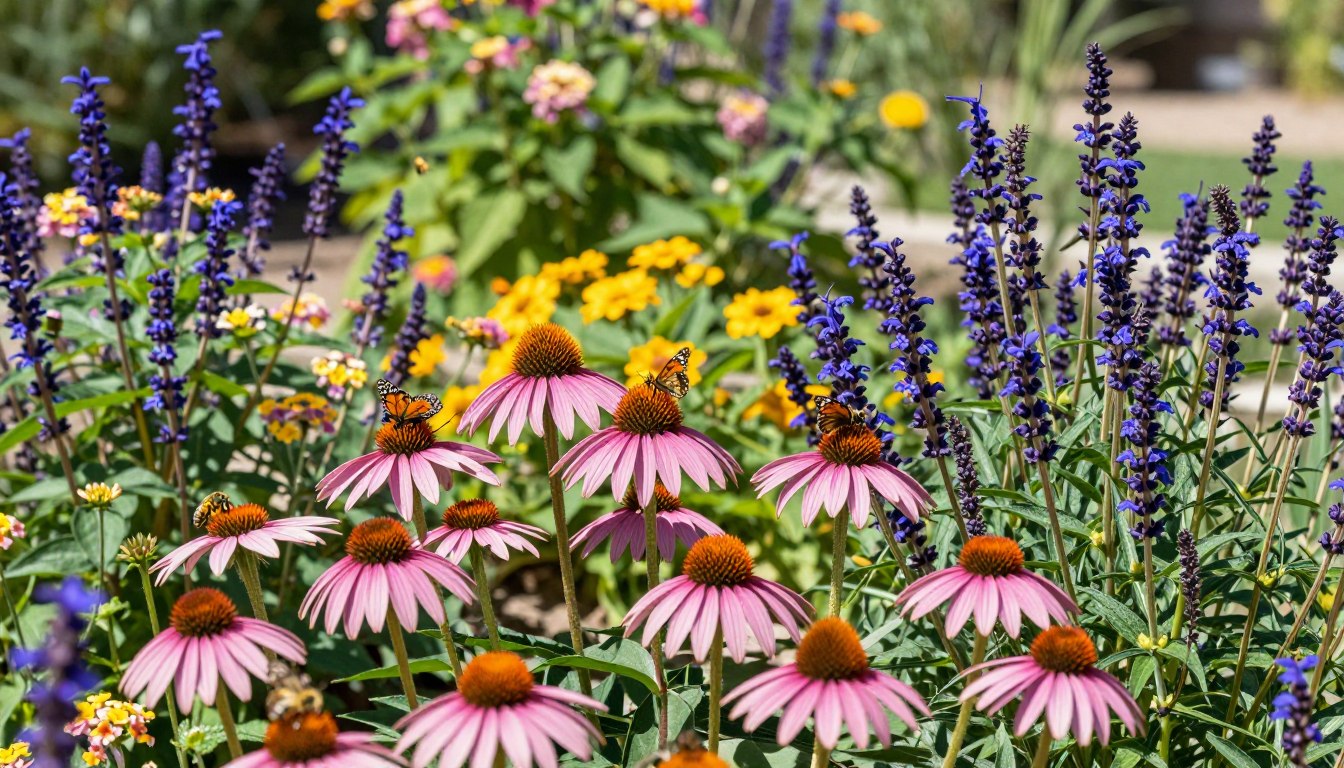
Create a Buzz-Worthy Garden That Blooms All Summer Long
When summer temperatures in Texas start climbing into the triple digits, many flowers wave the white flag. But pollinators don’t take the summer off.
Your garden shouldn’t either.
The good news? There are plenty of beautiful plants that not only survive Texas heat but absolutely thrive in it. By choosing pollinator-friendly varieties adapted to our climate, you can create a colorful garden filled with butterflies, bees, hummingbirds, and beneficial insects from spring through fall.
Whether you’re starting a dedicated pollinator bed or simply adding a few blooms to your landscape, these Texas-tough plants will reward you with months of color and activity.
Why Pollinator Gardens Matter
Creating a pollinator-friendly space does more than beautify your yard. These gardens serve critical ecological functions while offering practical benefits for your entire landscape.
Benefits of Pollinator-Friendly Gardens
- Support declining bee and butterfly populations facing habitat loss
- Improve vegetable and fruit production in your garden through increased pollination
- Increase biodiversity in your backyard ecosystem
- Reduce water use with drought-tolerant native plants
- Provide season-long color and visual interest
- Create wildlife habitat for beneficial insects and birds
Every pollinator garden makes a difference. Even a small patch of the right flowers can support hundreds of bees, butterflies, and other essential insects throughout the year.
1. Lantana
The Ultimate Texas Workhorse

Why Pollinators Love It
Lantana produces abundant nectar-rich blooms that butterflies can’t resist. The clustered flowers provide easy landing platforms for bees while hummingbirds visit regularly for the sweet nectar.
Expect to see Gulf Fritillaries, Monarchs, and Swallowtails throughout summer. Native bees and beneficial insects also frequent these reliable flowers for pollen and food.
Why Gardeners Love It
This plant handles triple-digit heat without breaking a sweat. Lantana thrives in full sun and actually prefers dry conditions once established.
It blooms continuously from spring until the first frost. Drought resistance means less watering and lower maintenance for busy gardeners.
Best Varieties for Texas
- Texas Flame – vibrant orange and red blooms
- Miss Huff – cold-hardy with orange flowers
- Lavender varieties – softer colors for diverse garden palettes
Pro Tip: Plant lantana in full sun and avoid overwatering. Too much water causes root rot and reduces flowering.
2. Purple Coneflower (Echinacea)
A Pollinator Favorite

Why Pollinators Love It
The prominent seed cone attracts native bees that harvest both pollen and nectar. Butterflies land on the sturdy petals to feed throughout the day.
In fall, goldfinches arrive to feast on the seed heads. This provides food for wildlife when many other flowers have finished blooming.
Why Gardeners Love It
Purple coneflowers thrive in full sun and well-drained soil. These native plants tolerate heat and drought once their roots establish.
They require minimal maintenance beyond occasional deadheading. The plants self-sow moderately, creating natural-looking drifts over time.
Bonus: Leave seed heads standing through winter to provide food for birds and shelter for beneficial insects.
3. Black-Eyed Susan
Cheerful and Nearly Indestructible

Why Pollinators Love It
Bees collect pollen from the dark central disk while butterflies sip nectar from the bright yellow petals. The open flower structure makes it easy for many beneficial insects to access food.
These daisy-like blooms attract small native bees and hover flies that help control garden pests naturally.
Why Gardeners Love It
Black-Eyed Susans handle poor soil without complaint. They tolerate drought conditions and continue blooming through the hottest months.
The long bloom season extends from early summer through fall. These cheerful flowers brighten any garden space with minimal care required.
Pro Tip: Deadhead spent blooms to encourage continuous flowering, or leave some seed heads for fall bird food.
Essential Tools for Your Pollinator Garden

After planting these first heat-loving flowers, quality tools make the job easier and more enjoyable. A durable hand tool set helps you dig, plant, and maintain your pollinator garden with less effort and better results.
Look for ergonomic handles that reduce hand strain during extended planting sessions. Stainless steel heads resist rust in humid Texas conditions.
4. Salvia
Hummingbird Heaven

Why Pollinators Love It
Tubular flowers provide abundant nectar that hummingbirds adore. The long bloom spikes offer multiple feeding opportunities on a single plant.
Bees and butterflies also visit salvia regularly for nectar. The vertical flower structure accommodates different pollinator sizes and feeding styles.
Popular Texas Varieties
- Mystic Spires Blue – compact growth with intense blue flowers
- Black and Blue – dramatic two-tone blooms that hummingbirds love
- Mealy Blue Sage – Texas native with powder-blue flowers
- White Salvia – elegant alternative for moon gardens
Why Gardeners Love It
Salvia thrives in full sun and heat. Most varieties bloom repeatedly when you deadhead spent flowers regularly.
These plants require minimal water once established. They resist deer browsing while attracting the pollinators you want.
Garden Tip: Deadhead occasionally to encourage continuous blooms from spring through fall.
5. Yarrow
Tough, Beautiful, and Beneficial

Why Pollinators Love It
The flat flower clusters provide easy landing platforms for small beneficial insects. Tiny florets offer abundant pollen and nectar in accessible locations.
Ladybugs, lacewings, and parasitic wasps that control garden pests visit yarrow frequently. These beneficial insects help maintain a healthy garden ecosystem naturally.
Why Gardeners Love It
Yarrow ranks among the most drought-tolerant pollinator plants available. It thrives in poor soil and handles neglect better than many garden flowers.
The flowers make excellent cuts for fresh or dried arrangements. Once established, yarrow requires almost no supplemental watering.
Best Colors for Texas Gardens
- White – classic choice that brightens shaded areas
- Yellow – adds warm tones to summer borders
- Soft peach – unique color for mixed pollinator plantings
6. Gregg’s Mistflower
The Butterfly Magnet

Why Pollinators Love It
If you want butterflies, plant this Texas native. The fluffy purple-blue blooms attract butterflies like few other plants can match.
Expect to see Queen butterflies, Monarchs, and Painted Ladies visiting throughout late summer and fall. The nectar-rich flowers provide essential fuel for migrating butterflies.
Why Gardeners Love It
Gregg’s Mistflower thrives as a Texas native plant perfectly adapted to our climate. It handles heat and drought while spreading to fill garden spaces naturally.
This plant blooms heavily in fall when many other flowers have finished. The late-season color provides critical food sources when pollinators need them most.
Texas Bonus: Being native to Texas means superior heat tolerance and minimal care requirements once established.
Efficient Watering for Established Gardens

Keep your butterfly magnets thriving with efficient watering that conserves resources. A quality drip irrigation system delivers water directly to plant roots while reducing evaporation in Texas heat.
Automatic timers ensure consistent watering schedules. Soaker hoses work perfectly for pollinator beds with multiple plant varieties that need different moisture levels.
7. Zinnias
Easy Color All Summer

Why Pollinators Love It
Butterflies favor zinnia blooms for their accessible nectar and bright colors. Bees visit regularly to collect pollen from the central disk flowers.
The variety of flower sizes accommodates different pollinator species. From tiny native bees to large swallowtail butterflies, zinnias welcome all visitors.
Why Gardeners Love It
Zinnias grow easily from seed, making them perfect for beginner gardeners. They thrive in raised beds, containers, and traditional garden borders.
These flowers tolerate heat and produce blooms continuously from summer through fall. Cut flowers regularly to encourage more blooming and enjoy fresh arrangements indoors.
Perfect For: Budget-friendly pollinator gardens started from inexpensive seed packets.
8. Autumn Sage (Salvia greggii)
A Native Texas Superstar

Why Pollinators Love It
Hummingbirds visit autumn sage repeatedly throughout the day for its abundant nectar. The tubular flowers perfectly match hummingbird feeding preferences.
Native bees also appreciate the reliable nectar source. The extended bloom season provides food when other flowers may be stressed by heat.
Why Gardeners Love It
This Texas native handles extreme heat without wilting or stopping bloom production. It blooms repeatedly from spring through fall with minimal deadheading.
Autumn sage requires minimal water once the roots establish in your garden. The compact shrub form works well in borders, containers, and xeriscaped areas.
Pro Tip: Available in red, pink, white, and coral varieties to match any garden color scheme.
9. Bee Balm (Monarda)
A Pollinator Party Plant

Why Pollinators Love It
Hummingbirds flock to bee balm’s tubular flowers that provide generous nectar rewards. Bees work the blooms constantly, giving this plant its common name.
Butterflies land on the spiky flower heads to reach the nectar-filled tubes. The long bloom period supports pollinators through multiple generations.
Why Gardeners Love It
Bee balm adds vertical interest and unique texture to pollinator gardens. The aromatic foliage releases pleasant scents when brushed or crushed.
Modern varieties resist powdery mildew better than older types. Choose mildew-resistant cultivars specifically bred for humid Southern gardens like those found in Texas.
Important: Select mildew-resistant varieties such as ‘Jacob Cline’ or ‘Raspberry Wine’ for best Texas performance.
10. Butterfly Weed
Essential for Monarchs

Why Pollinators Love It
As a native milkweed variety, butterfly weed provides essential nectar for many pollinators. More importantly, it serves as the exclusive host plant for Monarch caterpillars.
Female Monarchs lay eggs only on milkweed species. The caterpillars feed exclusively on milkweed leaves before forming their chrysalis.
Many other butterflies, bees, and beneficial insects visit the bright orange flowers for nectar throughout summer.
Why Gardeners Love It
Plant butterfly weed in full sun with well-draining soil for best results. Once established, it thrives with little care or supplemental watering.
The deep taproot makes this plant extremely drought tolerant once mature. Avoid transplanting established plants since the taproot doesn’t recover well from disturbance.
Conservation Impact: Every butterfly weed plant supports declining Monarch populations during their migration through Texas.
Complete Your Pollinator Paradise

Enhance your complete pollinator garden with these finishing touches that attract even more beneficial wildlife. A quality pollinator attractant mix adds diversity while beneficial insect houses provide nesting sites for native bees.
These additions create a complete ecosystem that supports pollinators year-round. Combined with your heat-tolerant plants, they transform your yard into a true wildlife haven.
Disclosure: As an Amazon affiliate, I earn a small commission from qualifying purchases at no extra cost to you. I only recommend products I believe will help your Texas pollinator garden thrive.
How to Design a Pollinator Garden That Works
Creating an effective pollinator garden involves more than just selecting the right plants. Follow these proven strategies to maximize your garden’s success and attract the most pollinators.
Plant in Groups
Large clusters of the same flower are easier for pollinators to find from a distance. Plant at least three to five of each variety together rather than scattering single plants throughout your garden.
Grouped plantings also create more visual impact and help pollinators work more efficiently. Bees and butterflies spend less energy traveling between flowers when blooms grow in clusters.
Provide Continuous Blooms
Choose plants that flower at different times throughout the growing season. This ensures food sources remain available from early spring through late fall.
Include early bloomers like salvias, mid-season favorites like coneflowers, and late-season champions like mistflower. Overlapping bloom times prevent gaps when pollinators might struggle to find food.
Skip the Pesticides
Many pesticides harm the pollinators you’re trying to attract. Even products labeled for specific pests can kill beneficial insects and bees.
Embrace natural pest control through beneficial insects instead. A healthy pollinator garden naturally balances pest populations without chemical intervention.
Add Water
A shallow dish with stones provides a safe drinking spot for butterflies and bees. Fill the dish with water just deep enough to cover the bases of the stones.
Pollinators land on the stones and drink safely without drowning. Refresh the water every few days to prevent mosquito breeding.
Leave Some Seed Heads
Birds and beneficial insects appreciate standing seed heads in fall and winter. Goldfinches feast on coneflower seeds while native bees overwinter in hollow plant stems.
Resist the urge to cut everything down in fall. The natural garden provides food and shelter when wildlife needs it most.
My Favorite Texas Pollinator Combination

For a low-maintenance, high-impact garden that attracts pollinators all season long, combine these six reliable performers:
Purple Coneflower
Provides sturdy structure and reliable blooms from early summer through fall. Native bees and butterflies visit constantly while goldfinches arrive for seeds.
- Plant in full sun
- Drought tolerant once established
- Minimal maintenance required
White Salvia
Adds vertical interest with repeated bloom cycles. Hummingbirds favor the tubular flowers while bees work the blooms throughout the day.
- Blooms spring through frost
- Handles extreme heat
- Deadhead for continuous flowers
Lantana
Delivers non-stop color in vibrant oranges and yellows. Butterflies swarm the nectar-rich clusters while hummingbirds make regular visits.
- Extremely drought resistant
- Thrives in poor soil
- No deadheading required
Yarrow
Offers delicate texture and flat-topped blooms that beneficial insects love. The tough plants handle neglect while providing season-long interest.
- Attracts beneficial predators
- Excellent cut flower
- Tolerates poor soil
Add colorful zinnias for easy summer blooms that butterflies adore. Include Gregg’s Mistflower for late-season butterfly activity when these migrants need fuel for their journey south.
This combination provides color, texture, and pollinator activity from spring until frost while standing up to Central Texas heat and drought. The varied heights create visual interest while different bloom times ensure continuous food sources.
Start Your Pollinator Garden Today
A thriving pollinator garden doesn’t have to be complicated or time-consuming. By choosing plants naturally adapted to Texas heat, you’ll spend less time watering and more time enjoying butterflies, hummingbirds, and bees visiting your garden.
Start small if you’re new to gardening. Even adding just a few of these pollinator plants can make a meaningful difference for local wildlife while creating a beautiful outdoor space you’ll enjoy all season long.
The declining populations of bees and butterflies need every garden they can find. Your yard can become part of the solution while rewarding you with color, activity, and the satisfaction of supporting essential pollinators.
Choose plants that match your sun exposure and soil conditions. Group them in clusters for maximum visual impact and pollinator efficiency. Skip the pesticides and let beneficial insects maintain natural balance in your garden ecosystem.
Most importantly, enjoy watching your garden come alive with wings, buzzing, and the vibrant colors of flowers that truly thrive in Texas heat.
Share Your Pollinator Garden Success
Which pollinator plant has been the hardest worker in your Texas garden? I’d love to hear about your experiences, favorite varieties, and any tips you’ve discovered for attracting bees, butterflies, and hummingbirds in the comments below!